

AI in banking: beyond the demo
Reflections from Finance Forum Zürich on what agents need to work inside a bank.
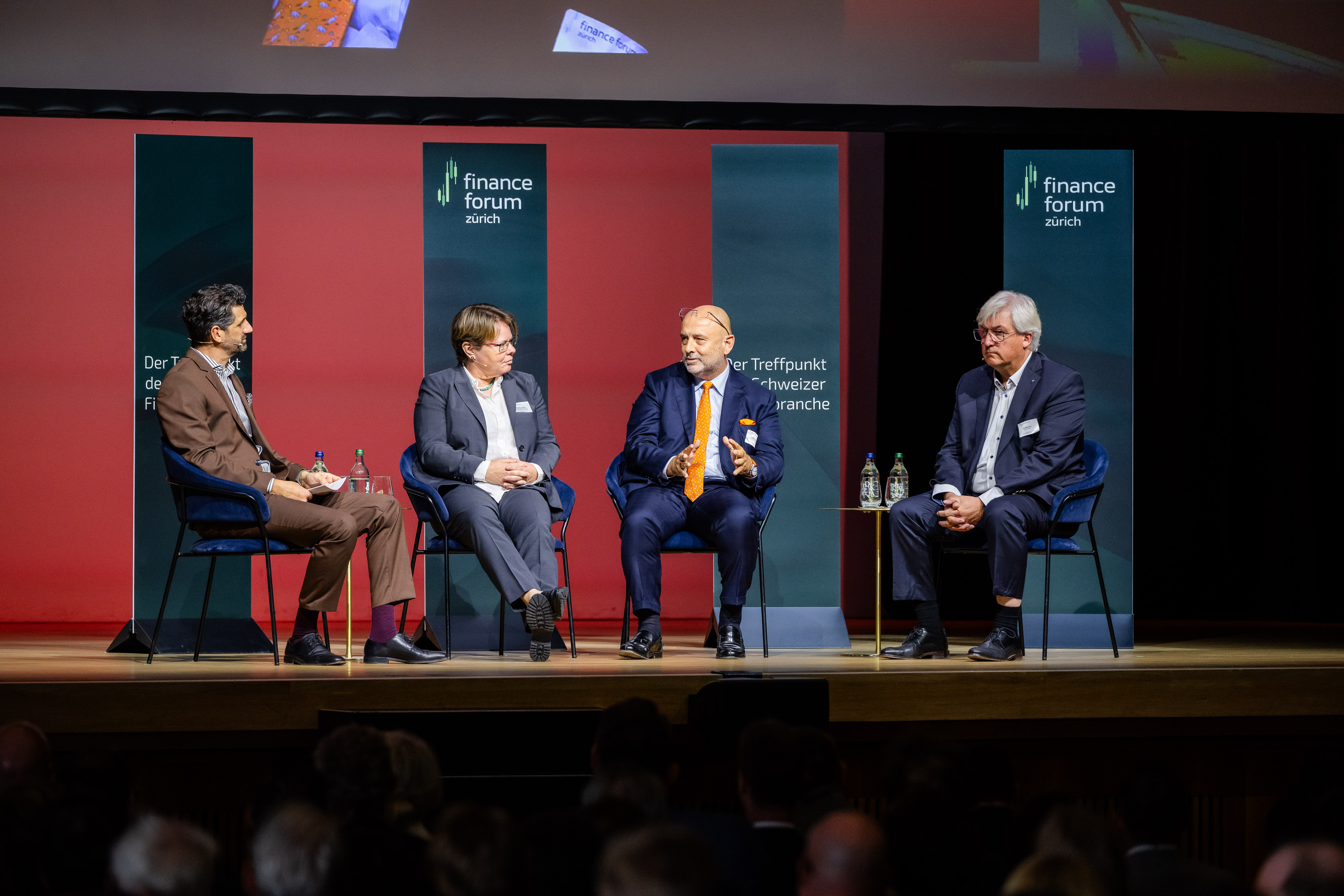
On September 22, I joined around 500 people at Finance Forum Zürich at the Kongresshaus. The programme brought together several perspectives on where banking is heading:
- Carmen Walker Späh opened the event, followed by Jean-Claude Juncker on Europe’s challenges and opportunities.
- Marianne Wildi, Franco Polloni and Urs Monstein discussed changing customers, technology and competition.
- Finnova’s Hendrik Lang spoke about transformation at the core of the bank, while ti&m’s Thomas Wüst addressed AI and digital sovereignty.
- Sergio Ermotti and Karin Keller-Sutter discussed the UBS capital debate in separate fireside chats with Andreas Lüscher.
For me, the most interesting thread was how far AI could change the bank itself, from the interface customers use to the work that happens behind it.
Banking through an assistant
Marianne Wildi, chair of Hypothekarbank Lenzburg, described a future in which the familiar online banking interface might disappear. As I understood her point, customers could interact through ChatGPT or another assistant, connected to the bank’s services through MCP. It was encouraging to hear a banking leader consider a change of that scale.
VP Bank CEO Urs Monstein emphasised something more enduring: people want a trusted person to talk to, including when businesses pass to the next generation. I agree. But that leaves considerable room for AI to improve the work behind the relationship. An agent could help a wealth manager examine more information, reconcile figures and investigate inconsistencies before meeting a client.
Connecting the systems
For an assistant to prepare that kind of analysis, the bank needs to make its data accessible while retaining control over it. This was a key topic at ti&m’s workshop on digital sovereignty, where the team presented its Open Datastack: a platform built from open-source components that brings together data ingestion, processing and reporting. The workshop also showed how coding agents could help build integrations, reducing the effort of bringing existing data sources into that environment.
That work extends down to the core banking system, where accounts and transactions are recorded. Hendrik Lang’s presentation addressed the modernisation of this layer. finnova.neo offers a modular path towards a platform that connects services through APIs. For AI, the potential is access to banking data and functions through defined interfaces. An agent could then work with the bank’s existing systems, subject to the permissions and controls those interfaces enforce.
Working within the bank’s rules
Once those connections exist, the bank needs to decide how an agent may use them. Sovereignty is part of that decision: who operates the infrastructure, where data is processed, and which providers the bank depends on. These concerns predate LLMs, but each new service needs to be assessed. FINMA’s outsourcing rules actually permit arrangements abroad under conditions, so the question extends beyond whether a server is physically in Switzerland.
The bank then needs to decide what an agent may do with that access. Each workflow needs an owner, appropriate permissions and clear approval boundaries. Its actions and supporting evidence should be inspectable, and its performance tested as models, tools and data change. FINMA’s AI guidance addresses governance, data quality and ongoing monitoring. These controls give the bank a basis for judging whether an agent is dependable.
The knowledge behind the data
Those controls are necessary, but an agent can operate within them and still misunderstand the data in front of it. This is a problem we encounter in our own work at Sovara Labs. An employee may know which of two similarly named tables is reliable, or when a rule has an exception. An agent cannot infer that knowledge from access alone.
In our previous post, we described an enterprise database containing similarly named tables such as FCLT_HIST and FCLT_HIST_1. The agent could inspect and query the database, but choosing the right table required context the schema did not provide. Experienced employees had learned those distinctions through years of work.
We have seen substantial accuracy improvements from making this company knowledge available to agents. But supplying context is only the last step. First, someone has to uncover what the agent is missing, find the person who knows it, and capture an answer with enough detail to be useful. Experts cannot spend their days documenting everything they know or reviewing every agent run.
This is the main problem we address at Sovara Labs. We help companies draw out the knowledge their agents need, including knowledge that lives only in employees’ heads. That means identifying gaps worth asking about and getting useful answers from the right people without repeatedly interrupting them. The resulting knowledge can then help agents navigate the company’s data, policies and exceptions.
The second challenge is keeping that knowledge trustworthy. A rule may change, an exception may apply only to one business unit, or two pieces of guidance may conflict. Accumulating more context can make an agent worse if its quality deteriorates. Maintaining this body of knowledge is therefore a central part of our work: preserving where guidance applies, keeping it current, and using evaluations to check whether changes improve the agent’s performance.
For financial institutions, deploying an agent should therefore include a way to keep improving it. Employee corrections need to become reliable knowledge, and evaluations need to show that each change helps without breaking what already works.